Peace of Thoughts: 7 Proof-Based mostly Practices


Peace of thoughts isn’t the absence of stress. I’ve been meditating for years and I nonetheless get unhealthy emails at 4:30pm. The follow didn’t make my thoughts quieter a lot because it modified what I do when it will get loud — which, after some time, is most of what peace of thoughts truly looks like in actual life.
This text is the trustworthy model. What peace of thoughts truly is. What it seems to be like on a daily Tuesday. And the seven issues, ranked roughly by how a lot analysis backs them, that I’ve watched assist in my very own follow and in college students I’ve taught.
What peace of thoughts truly is
Peace of thoughts is the felt sense which you can meet what’s in entrance of you with out it taking on. Not numbness. Not a everlasting calm. Simply sufficient inside steadiness {that a} arduous second doesn’t run your complete afternoon.
A helpful distinction: inside peace is nearer to a worldview — a long-term relationship with your individual thoughts. Peace of thoughts is extra granular. It’s the state you may attain for when stress hits, and the follow of returning to it extra typically. You may have peace of thoughts on a nerve-racking day. You may lose it on a trip. The purpose isn’t to dwell there. The purpose is to know how again.
What peace of thoughts seems to be like on a daily Tuesday
Most articles describe peace of thoughts as if it’s a Sunday-morning state — quiet room, scorching tea, nothing on the calendar. That’s the simple model. The model value training for is more durable and extra helpful:
- A coworker says one thing pointed and also you discover the urge to escalate, however you don’t.
- The 3am thought spiral begins, you watch it for a couple of minutes, and also you return to sleep.
- Your inbox has 47 unread and also you do the subsequent e mail as a substitute of catastrophizing about all 47.
- Somebody asks how you’re and also you truly verify earlier than answering.
That’s peace of thoughts within the wild. Not the absence of stress. The presence of a small regular hole between what occurs and what you do about it.
7 practices that truly assist
These are ranked roughly so as of how a lot analysis helps them — and, second to that, by how typically I see them make an actual distinction in my very own follow and in college students I’ve taught.
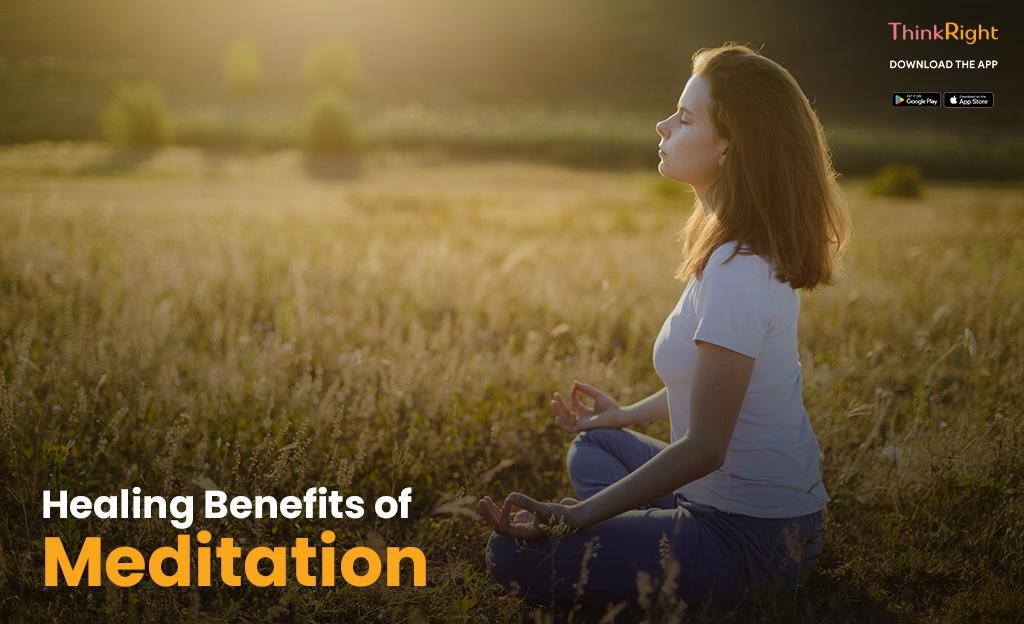
1. Apply meditation
Meditation has the strongest proof base of something on this listing, and it’s the follow that the majority instantly trains the small regular hole I described above.
A 2014 meta-analysis printed in JAMA Inner Drugs by Goyal and colleagues checked out 47 trials with about 3,500 contributors and located that mindfulness meditation packages had reasonable proof for decreasing nervousness, melancholy, and stress — akin to what you’d anticipate from antidepressants for some circumstances, with results holding at follow-up. That’s a significant discovering from a strict reviewer.
What the analysis gained’t let you know is what the follow truly looks like over time. For me, meditation by no means made anxious ideas cease taking place. It made me discover them earlier. The 4:30pm e mail nonetheless hits. I simply catch myself replaying it across the second go and select whether or not to maintain looping. That’s the precise profit. Much less hijacking, not much less climate.
If you wish to begin, you don’t want a 30-minute dedication. A constant 5 minutes a day will educate you greater than a sporadic 30. There’s a 5-minute meditation information in the event you’d like a walkthrough, and the 30-Day Mindfulness Course within the DTM app is the structured choice if you would like a each day guided follow for the primary month.
2. Care for your sleep
Most peace-of-mind issues worsen whenever you’re underslept and higher whenever you’re not. The thoughts that misplaced peace at 3pm was often a drained thoughts by 10am.
The CDC recommends 7+ hours per evening for adults, and the American Academy of Sleep Drugs has persistently discovered that power quick sleep is related to larger charges of tension and melancholy together with the apparent daytime signs. The mechanism isn’t mysterious. Sleep is when the mind consolidates emotional reminiscences and clears metabolic waste. Skip sufficient of it and the entire subsequent day begins at a deficit.
The interventions that truly work for sleep are unsexy and well-evidenced:
- A constant sleep and wake time, even on weekends.
- A darkish, cool bed room (round 65°F).
- Telephone out of the bed room or a minimum of face-down half-hour earlier than mattress.
- Caffeine cutoff at midday in the event you battle with sleep onset.
In case your thoughts is what wakes you at 3am, the follow that’s helped me most is a physique scan — a meditation that walks your consideration slowly via the physique and offers the racing ideas one thing else to do. There’s a meditate-before-bed information and scenario-specific practices within the library for falling again asleep whenever you wake at 3am.
3. Transfer your physique repeatedly
Train is without doubt one of the few interventions with analysis help akin to remedy and drugs for mild-to-moderate nervousness and melancholy. A 2016 meta-analysis within the Journal of Psychiatric Analysis by Schuch and colleagues discovered train had a big impact on depressive signs throughout 25 randomized managed trials, and related evaluations on nervousness discover reasonable to sturdy results.
You don’t want a health club membership or a routine you’ll abandon by February. You want constant motion most days — a 30-minute stroll counts, and so does an actual lunchtime stair climb or a 20-minute energy session at dwelling. The temper impact of cardio exhibits up reliably inside a single session and compounds over weeks.
The trustworthy model: train hasn’t changed meditation for me, and it isn’t an alternative choice to remedy when remedy is what’s wanted. However beneath each of these, common motion is what makes all the pieces else simpler. The thoughts I carry to a meditation cushion after a stroll is a unique thoughts than the one I carry after eight hours at a desk.
4. Spend time in nature
This one has extra analysis behind it than individuals understand. A 2015 examine in PNAS by Bratman and colleagues discovered {that a} 90-minute stroll in a pure setting decreased rumination and decreased neural exercise within the subgenual prefrontal cortex — the area linked to depressive thought patterns — in comparison with a 90-minute stroll in an city setting. The impact held even when researchers managed for the cardiovascular advantages of strolling.
You don’t want wilderness for this to work. A park, a tree-lined road, a quiet physique of water. One thing dwelling, ideally with out site visitors noise overpowering it. The mechanism appears to be partly about what nature pulls your consideration away from — the loops, the inbox, the working commentary — and partly about what it pulls your consideration towards.
The mix of strolling and meditation is a very efficient model. Much less sit-still strain, similar attention-training, plus the nature-exposure profit. There’s a strolling meditation within the library in the event you’d like a guided one.
5. Discover and reframe your ideas
Loads of what steals peace of thoughts isn’t an occasion. It’s the second, third, and fourth move over an occasion. The assembly was uncomfortable. The replay of the assembly at 9pm is the half that ruins the night.
Cognitive reframing is the talent of catching the second move and asking whether or not the interpretation you’re dedicated to is the one legitimate one. It’s the engine of cognitive behavioral remedy and mindfulness-based cognitive remedy, and a long time of analysis help it as some of the efficient abilities within the mental-health toolkit.
The talent is concrete. You discover the thought. You identify what it’s — that’s the spiral beginning once more. You ask one trustworthy query. Is that this incomes the airtime it’s getting? Usually it isn’t. That’s the second a unique alternative turns into potential.
That is additionally the place meditation pays off. Reframing requires you to note the thought within the first place, and noticing is the muscle meditation builds. If reframing feels inconceivable, it often means the ideas are too quick — and the repair is extra follow noticing them, not making an attempt more durable to argue with them.
6. Settle for what’s exterior your management
That is the follow the Stoics named, the Serenity Prayer summarized, and what mindfulness lecturers name equanimity. The talent of distinguishing what’s yours to affect from what isn’t, and placing your effort the place it belongs.
Most peace-of-mind issues dwell within the hole between what we need to management and what we truly can. Different individuals’s opinions. The climate. Whether or not a job interview goes properly. Whether or not a tough dialog lands the way in which you hoped. You may put together. You may present up. You are able to do the work of being somebody you respect. You may’t make outcomes assure themselves.
I discover this sample in my very own follow most round uncertainty. The ready between submitting and listening to again. The evening earlier than a tough day. The hours after a tough dialog after I desire a verdict on whether or not it went properly. The work isn’t to make the discomfort go away. The work is to cease including psychological rehearsal on prime of it. The discomfort is the climate. The rehearsal is the struggling.
There’s an article on equanimity in the event you’d prefer to go deeper, and an acceptance article that walks via particular issues value accepting.
7. Discuss to somebody — pal or therapist
The ideas that loop hardest are those we maintain silent. Saying them out loud to an individual who truly listens is without doubt one of the most constant peace-of-mind interventions there may be, and it’s one most individuals under-use.
For abnormal stress, a trusted pal or associate is commonly sufficient. Inform them what’s truly in your thoughts, not the model polished for social presentation. The aid isn’t within the recommendation. It’s within the not-being-alone-with-it.
For ideas that don’t move — nervousness that follows you for weeks, melancholy that flattens you, intrusive ideas that gained’t quiet, something that interferes with work or sleep or relationships persistently — see a therapist. Mindfulness can complement remedy. It could possibly’t substitute it. Should you don’t know the place to begin, there’s a information to discovering a therapist that covers what to search for and tips on how to make the primary name.
Should you’re in disaster or experiencing ideas of self-harm, please attain out to a disaster line — within the US, that’s 988. Meditation and articles like this one will not be the appropriate device for disaster. Persons are.
Often requested questions
What’s the distinction between peace of thoughts and inside peace?
I’d describe inside peace as a long-term relationship with your individual thoughts — nearer to a settled worldview than a state. Peace of thoughts is extra granular: the moment-to-moment capability to satisfy what’s in entrance of you with out it taking on. You may have peace of thoughts on a nerve-racking day. You may lose inside peace quickly with out dropping the follow that builds it. Each come from the identical set of abilities; they simply describe totally different time scales.
Can meditation truly give me peace of thoughts?
Ultimately, and never in the way in which most advertising claims. Meditation doesn’t make stress go away. It makes you discover the spiral earlier, and offers you a small regular hole between the set off and your response. That hole is what peace of thoughts looks like in actual life. It builds slowly, with constant follow, over months — not in a weekend retreat.
Is peace of thoughts potential if I’ve nervousness?
Sure — however the framing issues. Peace of thoughts isn’t the absence of anxious ideas. For most individuals who dwell with nervousness, it’s the capability to maintain functioning, sleeping, and being current in your life whereas the anxious ideas come and go. If nervousness is extreme or persistent, mindfulness practices assist most as a complement to remedy, not as a alternative.
How lengthy till I really feel a distinction from these practices?
Sleep and motion: often inside every week of constant change. Meditation: small noticeable shifts inside a few weeks of each day follow; deeper modifications over months. Nature publicity: typically the identical day. The thinking-pattern work (reframing, acceptance) takes longest as a result of it requires you to first discover the patterns, which is a talent that develops slowly. None of those are fast fixes. All of them compound.
The one factor to take from this
Should you take one factor from this text, take this. Peace of thoughts isn’t a state you arrive at. It’s a small, repeatable talent — noticing what’s taking place 5 seconds sooner than you’ll have, and selecting otherwise. Some days you’ll do it. Some days you gained’t. Unhealthy will maintain being barely stronger than good, climate will maintain being climate, and 4:30pm emails will maintain touchdown. What modifications is how lengthy you let any of it run.
If you wish to begin the meditation piece in the present day, a 5-minute guided follow is sufficient. That’s the precise first step — not the proper setup, not the appropriate cushion, not the appropriate time of day. Simply 5 minutes, in the present day, and once more tomorrow. The remaining follows from that.
Supply hyperlink