Nature vs Nurture: What Shapes Our Relationships?



There’s a sentence {couples} say to one another usually, in some model: that’s simply how he’s. Or that’s one thing she received from her mom. Temperament and household historical past — the 2 acquainted shoulders of the nature versus nurture debate, popularized by Francis Galton in 1869. He was an English polymath, statistician, and in addition the cousin of Charles Darwin. The query has by no means totally settled since. The talk has narrowed in 156 years. The way in which it reveals up between two individuals in an extended relationship has not.
For {couples}, the extra helpful query could also be neither which aspect wins, nor how the chances cut up. It could be what will get constructed subsequent, no matter the place any of it began.
What does nature discuss with within the nature vs. nurture debate?
Nature, on this context, refers to what’s inherited — the genes handed from one era to the following, the temperamental tendencies that present up early and have a tendency to persist. An individual’s baseline stage of stress reactivity, social orientation, sensitivity, depth. The argument behind the nature aspect has lengthy been that vital options of character and habits are written, in some measure, earlier than any atmosphere has an opportunity to weigh in.
Twin research — notably research of similar twins raised aside — have lent weight to this view. So has, extra not too long ago, behavioral genetics. The estimates fluctuate, however most converge someplace across the suggestion that character traits are reasonably heritable.
What does nurture discuss with within the nature vs. nurture debate?
Nurture refers to atmosphere — the house an individual grew up in, the relationships modeled in entrance of them, the cultural and financial situations, the experiences that formed expectations. The nurture aspect has traditionally argued that human habits is, to a significant extent, a product of context. Change the context, change the individual.
Fashionable analysis has sophisticated each extremes. Epigenetics means that early environments can affect how inherited genes are literally expressed. The clear both/or has, in most quarters, given option to a extra attention-grabbing and fewer tidy each, interacting.
Nature vs Nurture Examples in Relationships
The lived examples are acquainted. A companion whose mom was anxious in battle might transfer into an analogous response below stress — nurture, maybe, performing some quiet inheriting of its personal. A companion whose household prevented troublesome subjects might discover them more durable to lift as an grownup. Genetically influenced traits — neuroticism, openness, sensitivity — might form what both companion finds simple and what feels effortful.
Usually, each traces of clarification are true directly. A selected behavior could also be partly inherited, partly modeled, partly a response to a second that has lengthy since handed. In Gottman’s vocabulary, these inherited and realized variations usually present up as perpetual issues — what his analysis has lengthy urged account for almost all of what most {couples} argue about — and as enduring vulnerabilities, the older sensitivities every companion brings into the connection, typically with out which means to.
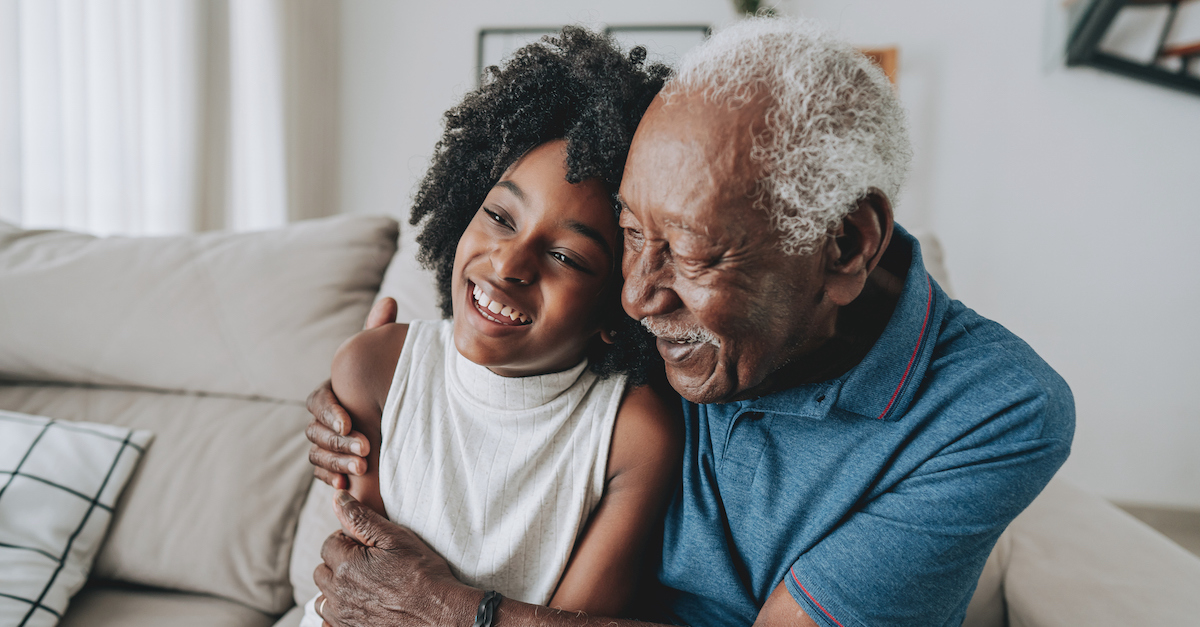
What might matter most, over the lengthy arc of a relationship, is what neither nature nor nurture alone accounts for: the patterns every couple builds with one another. The way in which one companion learns to ask for what they want. The way in which the opposite learns to obtain it. Small issues, repeated.
One in every of Dr. Gottman’s extra reassuring findings, particularly for {couples} carrying long-standing variations, is that this: you would not have to resolve your perpetual issues in your relationship or marriage to thrive. His work has produced sensible, research-backed instruments for managing these variations, and his analysis over greater than fifty years means that this interactional layer — managing moderately than fixing, constructing moderately than fixing — is persistently what predicts how {couples} fare over time.That, in flip, is the place the work of emotional literacy begins. Naming emotions. Understanding a companion’s. Constructing a shared language for the troublesome ones. The Gottman Institute’s free emotional literacy information is one place to start out.